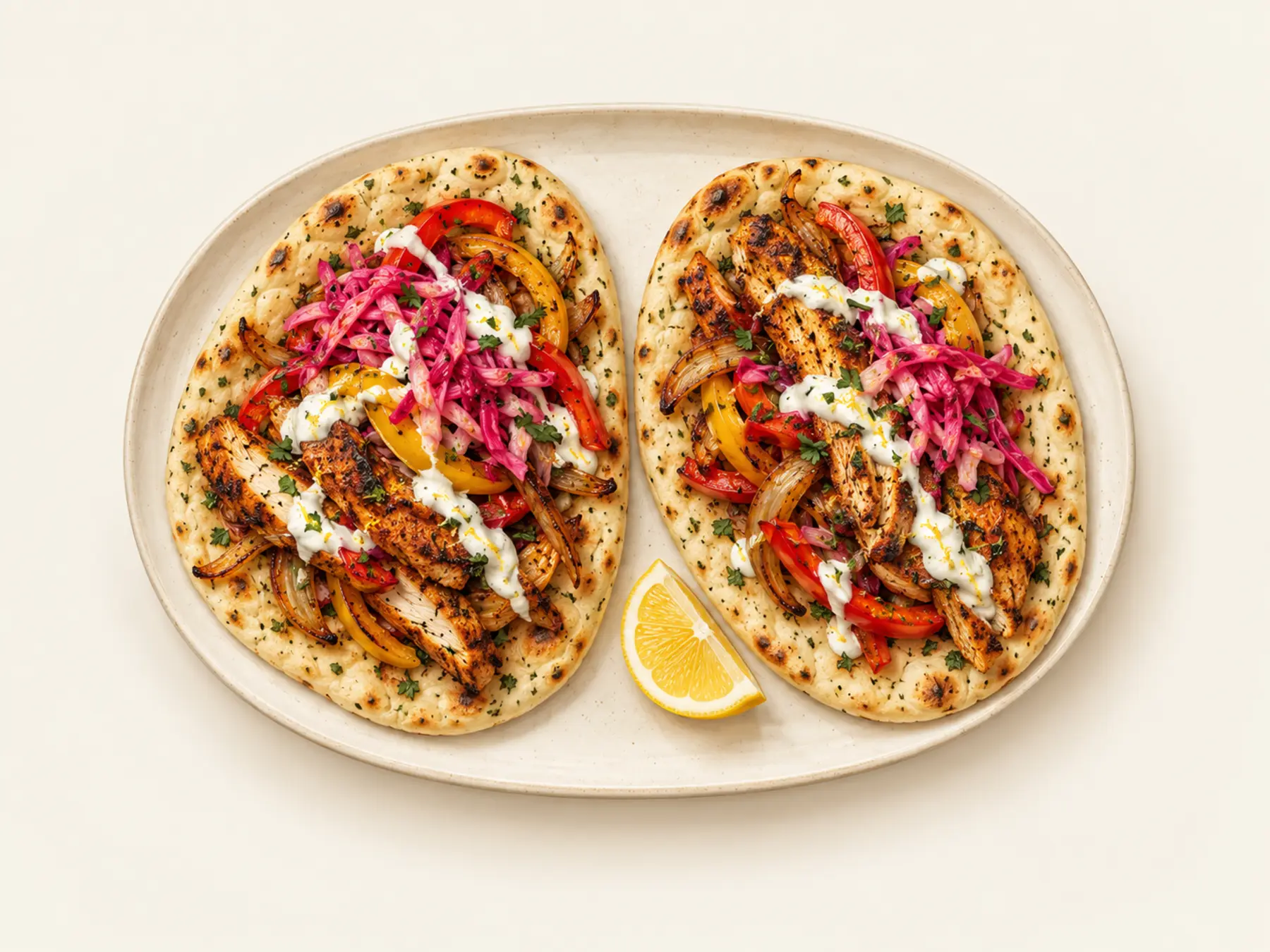
Cajun Chicken Flatbreads
Browned Cajun chicken, sweet peppers and onions in soft herby flatbreads. Cold lemon sour cream and pink pickled slaw bring the creamy, sharp crunch.
Portions
Quantities that fit your table.
Buy
Use the measured amount. Everyday equivalents are approximate, not whole packs to buy. Spoon measures and pieces stay the same in either unit view.
Chicken + marinade
- 600 gchicken breast stripsfresh, evenly cut
- 1½ tbspCajun seasoningfor the chicken; check the salt and chilli content
- 1½ tbspolive oilfor the marinade
Sweet peppers + onions
- 1large sweet pepperred, yellow or a mixture
- 1brown onion
- 2garlic clovesor the equivalent frozen chopped garlic stated on the pack
- ½ tspCajun seasoningfor the vegetables
- a littleolive oilfor frying, as needed
Cream + flatbreads
- 180 gsour cream
- ½lemonjuice to taste; keep some for finishing
- 5herby flatbreadsM&S Middle Eastern Inspired, or similar soft flatbreads
- to tastesaltcheck the seasoning blend before adding
- to tasteblack pepper
Alongside
- to servepink pickled slawM&S Pink Pickled Slaw, or similar; keep cold; optional
- to servechipscook separately following the packet; optional
Prep
8 min preparation, included in the total.
- Plan the sides
Check the flatbread warming instructions before starting. If they need an oven, preheat it while the chicken marinates. If having chips, check their cooking time and start them separately so they finish with the filling; any extra time needed for chips is outside the flatbread total.
- Pepper, onion + garlic
Deseed the pepper and peel the onion; slice both into thin strips so they soften in the same time. Finely chop or crush the garlic. If using frozen chopped garlic, follow its packet guidance.
- Measure + chill
Measure the chicken and vegetable seasoning separately, then the marinade oil and sour cream. Cut the lemon into wedges. Leave the sour cream and slaw in the fridge until needed. Use level measuring spoons: a teaspoon is 5 ml and a tablespoon is 15 ml.
- Chicken + equipment
Use evenly sized chicken strips, cutting any unusually thick pieces down. Do not wash raw chicken. Wash hands, board and utensils after handling it, and have a clean plate ready for cooked food. The timings assume a large frying pan and two batches of chicken.
Cook
Allow about 50 minutes from starting prep to serving, including a 20-minute refrigerated marinade. Cook the vegetables and mix the sauce while the chicken marinates; those times overlap. The heat-based steps take about 25–30 minutes in total, allowing two chicken batches. Chips and any longer marinating time are extra.
- 2 min hands-on
Coat the chicken
2 minMix the chicken strips with 1½ tbsp olive oil, 1½ tbsp Cajun seasoning and black pepper. Coat thoroughly. Check whether the Cajun blend already contains salt before adding any salt. No tomato purée or lemon in this marinade.
- Hands off · marinating
Marinate in the fridge
20 minCover the coated chicken. Refrigerate for 20 minutes while you do the next two steps: cook the vegetables and mix the sauce. This is overlapping time, not another 20 minutes added after them. Keep the chicken refrigerated until the pan is ready.
- 4 min hands-on
Sweeten the vegetables
9 minWhile the chicken marinates, heat a little olive oil in the frying pan over medium-high heat. Add the sliced pepper and onion. Fry for 7–9 minutes in total, turning occasionally, until softened and browned at the edges. Add the garlic and ½ tsp Cajun seasoning for the final 30–60 seconds. If the spices begin to scorch, lower the heat. Transfer the vegetables to a clean plate and take the pan off the heat until the chicken is ready.
- 2 min hands-on
Mix the lemon sour cream
2 minStill within the marinating time, stir 180 g sour cream with a small squeeze of lemon, a pinch of salt and some black pepper. Taste before adding more lemon: it should be cool, creamy and lightly tangy, not thin or sharply sour. Reserve some lemon for finishing. Put the sauce back in the fridge.
- 8 min hands-on
Brown the chicken in batches
14 minOnce the marinating time is up, reheat the same pan over medium-high heat. Cook the marinated chicken in a single layer, normally in two batches for this build. Allow about 5–8 minutes per batch, turning to colour both sides. Leave it in contact with the pan long enough to brown; crowding makes it steam. Aim for dark golden Cajun edges, not burnt seasoning. Add a little more frying oil only if the pan needs it. Set the cooked first batch on a clean plate while the second cooks. Check the thickest strips: a clean probe should read 75°C for 30 seconds. Without a probe, cut into the thickest piece and check it is steaming hot throughout, with no pink flesh and clear juices. Cook longer if needed; the clock is only a guide.
- 1 min hands-on
Bring the filling together
1 minReturn all the cooked chicken, peppers, onions and garlic to the pan for the final minute. Toss until everything is hot. Taste and adjust the salt and black pepper, then take off the heat and cover while you warm the bread.
- 1 min hands-on
Warm the flatbreads
3 minWarm the herby flatbreads according to their packet, keeping them soft and pliable rather than crisp. Three minutes is a planning allowance; use the packet method and time if different. Stack under a clean tea towel to keep soft. If the packet calls for an oven, have it preheated before this step.
- 2 min hands-on
Build hot, finish cold
2 minSpread a little cold lemon sour cream over each warm flatbread. Add the hot Cajun chicken and sweet vegetables, then the cold pink pickled slaw, if using. Finish with another small spoon of the sour cream and a tiny squeeze of reserved lemon. Serve straight away with the separately cooked chips, if having them. Divide the filling to match the portions you selected, cutting flatbreads as needed.
Kitchen notes
The default is 3 adults and 1 child at a 60% portion: 600 g chicken, 5 flatbreads and 180 g sour cream. This is a filling meal with chips alongside. Adjust bread to appetite and the size of your flatbreads. Quantities scale; pan capacity does not. Allow 5–8 minutes for each extra chicken batch, and use another pan for a larger quantity of vegetables. Slaw, chips and extra frying oil are to serve or as needed, not fixed portions.
The build that matters
Give the chicken room to develop colour, let the onion and pepper turn properly sweet, and keep the cream and slaw cold until assembly. Hot, smoky filling against cool, sharp toppings is the point. This is best assembled just before eating.
Bread, portions + swaps
The original build used M&S herby Middle Eastern flatbreads and Pink Pickled Slaw. Similar soft flatbreads and a tangy cabbage slaw work here too. Five breads is the default, not a rule: use four to six for this household according to their size and appetite. The original chicken and cream ranges were 500–600 g and 150–200 g; the scalable build uses 600 g and 180 g.
Seasoning + children
Cajun blends vary greatly in salt and chilli. Choose a mild blend for a shared family batch, and reduce it to suit the people eating. The child control changes quantity, not spice strength. If the adults want more heat, add it to their portions at the table rather than making the entire batch hotter.
Timing without shortcuts
The 50-minute estimate includes 8 minutes of prep and a 20-minute marinade, with vegetables and sauce made during that wait. It allows 14 minutes for two chicken batches. Larger batches, thicker strips or a slower bread-warming method need longer. Start optional chips separately according to their packet. These are planning estimates, not a new stopwatch test.
Keep + reheat
Keep any leftover filling separate from the bread, cream and slaw. Cool and refrigerate cooked chicken and vegetables within two hours, then eat within 48 hours. Reheat the filling only once, until steaming hot throughout; keep the cold toppings cold and follow their storage labels. Reheating quality and freezing have not been tested for this recipe.
Food Standards Agency — cooking and leftovers ↗Allergens + measures
The usual flatbreads contain wheat/gluten and sour cream contains milk. Check the bread, Cajun blend and slaw labels for the full allergen information. Use level 5 ml teaspoons and 15 ml tablespoons, not cutlery spoons. Dry Cajun seasoning stays in spoon measures because its weight varies by blend; the unit switch does not invent a gram conversion.