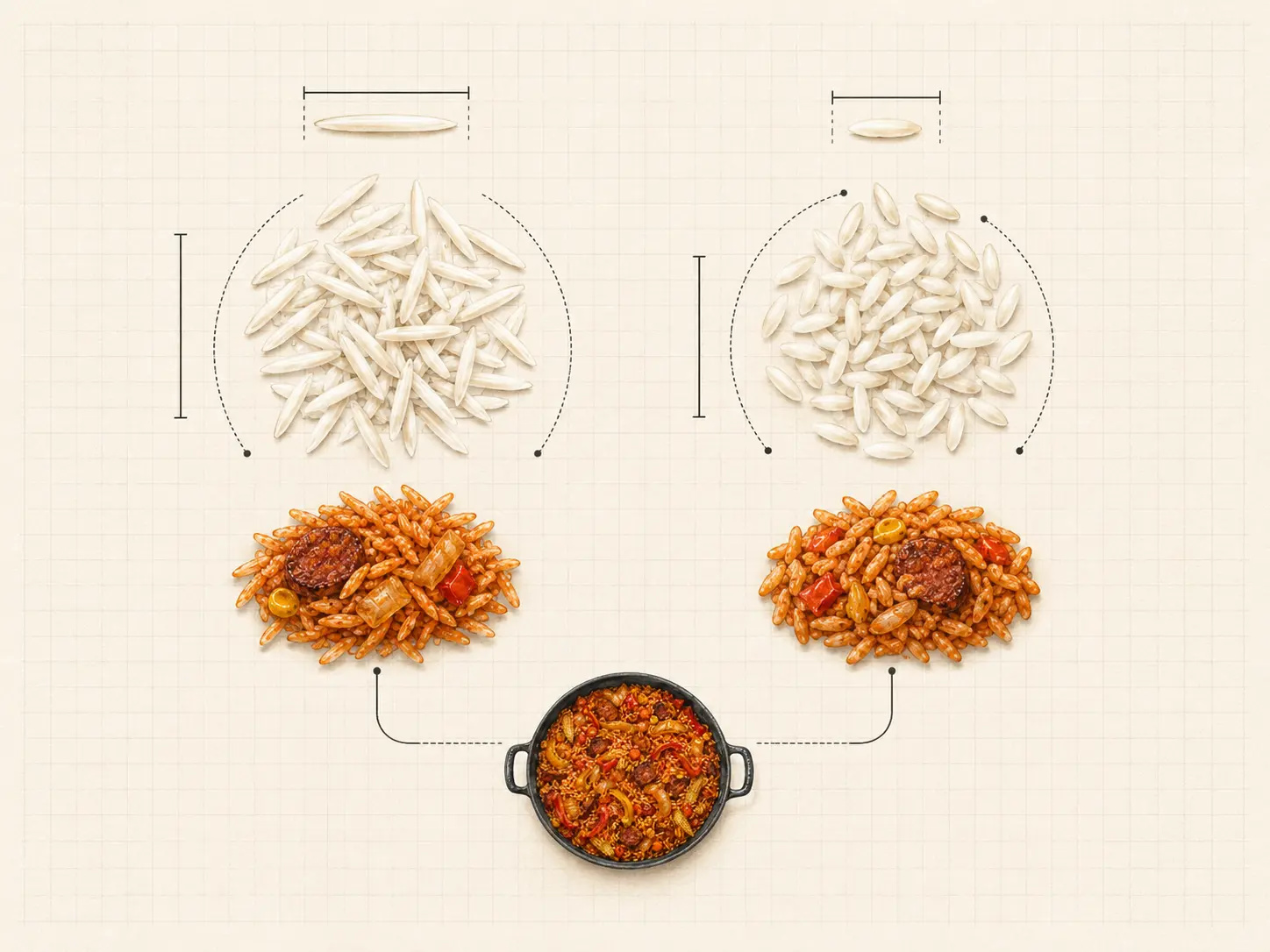
Basmati and long-grain rice are often presented as two opposing choices.
They aren't. Basmati is long-grain rice.
“Long grain” is the broad physical category. “Basmati” names a particular aromatic group within it, associated with long, slender grains that become longer as they cook. Asking whether rice is basmati or long-grain is a little like asking whether a dog is a Labrador or a dog.
The useful question is whether basmati behaves differently enough from an ordinary supermarket long-grain rice to matter in the dish you are cooking.
What basmati adds
Basmati's most obvious distinction is aroma. A compound called 2-acetyl-1-pyrroline contributes to the popcorn-like, nutty smell associated with fragrant rice.
The grains are also characteristically slender and elongate during cooking. Properly cooked basmati is prized for remaining separate and fluffy, which matters when the rice is exposed and doing much of the sensory work: a pilaf, biryani or simple bowl served alongside something else.
Generic long-grain rice tells you less. It describes the shape category, not one exact variety, aroma or starch profile. One supermarket bag can behave a little differently from another and still be accurately labelled long grain.
That variability is a reason to read the pan, not a reason to make dinner complicated.
What the basic cooking guidance says
USA Rice gives white long-grain and white basmati the same broad starting point for a covered saucepan: two parts liquid to one part rice by volume, with 15–18 minutes of cooking.
That does not mean the grains are identical. It means their basic absorption cooking requirements can overlap enough for them to be interchangeable in many casual recipes.
It also does not give every one-pan meal a universal ratio.
Vegetables release water. Tomato purée contributes some. A wide frying pan loses more steam than a narrow saucepan. A loose lid lets more escape than a tight one. Hob strength and batch size move the result again.
The bag tells you what the rice is. The pan tells you what it needs now.
The Plateworks verdict
Smoky Chorizo One-Pan Rice has been cooked with basmati and ordinary long-grain rice. Daniel found no discernible difference in the finished dish.
That makes sense without pretending the two products are identical. This pan contains smoked paprika, cumin, chorizo fat, deeply cooked tomato purée, coloured vegetables, sweetcorn and—in the adult portion—chipotle paste. The rice is coated and seasoned rather than presented on its own.
In that setting, basmati's delicate aromatic advantage is not the main event.
Use whichever is in the cupboard.
If both are sitting side by side, basmati remains a perfectly good default. If only ordinary long-grain is available, there is no reason to postpone dinner or redesign the liquid around an imagined major difference.
Does the rice need rinsing?
Rinsing removes loose surface starch and can help cooked grains remain more separate. It is common advice for standalone basmati rice, and it is useful when maximum fluffiness is the aim.
The current Plateworks recipe says to measure the rice and keep it dry: no rinsing is required for this build.
That is not a universal argument against rinsing. It simply records how this particular recipe has been developed and tested. The rice is coated in tomato, spices and rendered chorizo fat before stock is added; it is not trying to produce a pristine white pilaf.
Until a side-by-side Plateworks test proves that rinsing materially improves this pan, the honest instruction is to follow the tested build rather than retrofit a grand theory.
If you do rinse out of habit, drain the rice thoroughly. Water clinging to it becomes part of the liquid in the pan, and wet rice will not coat or toast in quite the same way as dry grains.
When the choice matters more
Choose basmati deliberately when:
- the aroma of the rice is meant to be noticeable;
- long, separate grains are central to the finished presentation;
- the rice is served plainly or with a restrained accompaniment;
- a specific traditional dish or tested recipe calls for it.
Choose ordinary long-grain without concern when:
- the rice is carrying a strong tomato, spice or stock base;
- it is one part of a crowded one-pan dinner;
- the recipe has been tested successfully with it;
- it is what you already have.
The grain still matters. It just matters less here than controlling the liquid, keeping the simmer steady, tasting before the timer ends and allowing the covered rest to finish the middle.
For this dish, the best rice is the one you stop cooking at the right time.