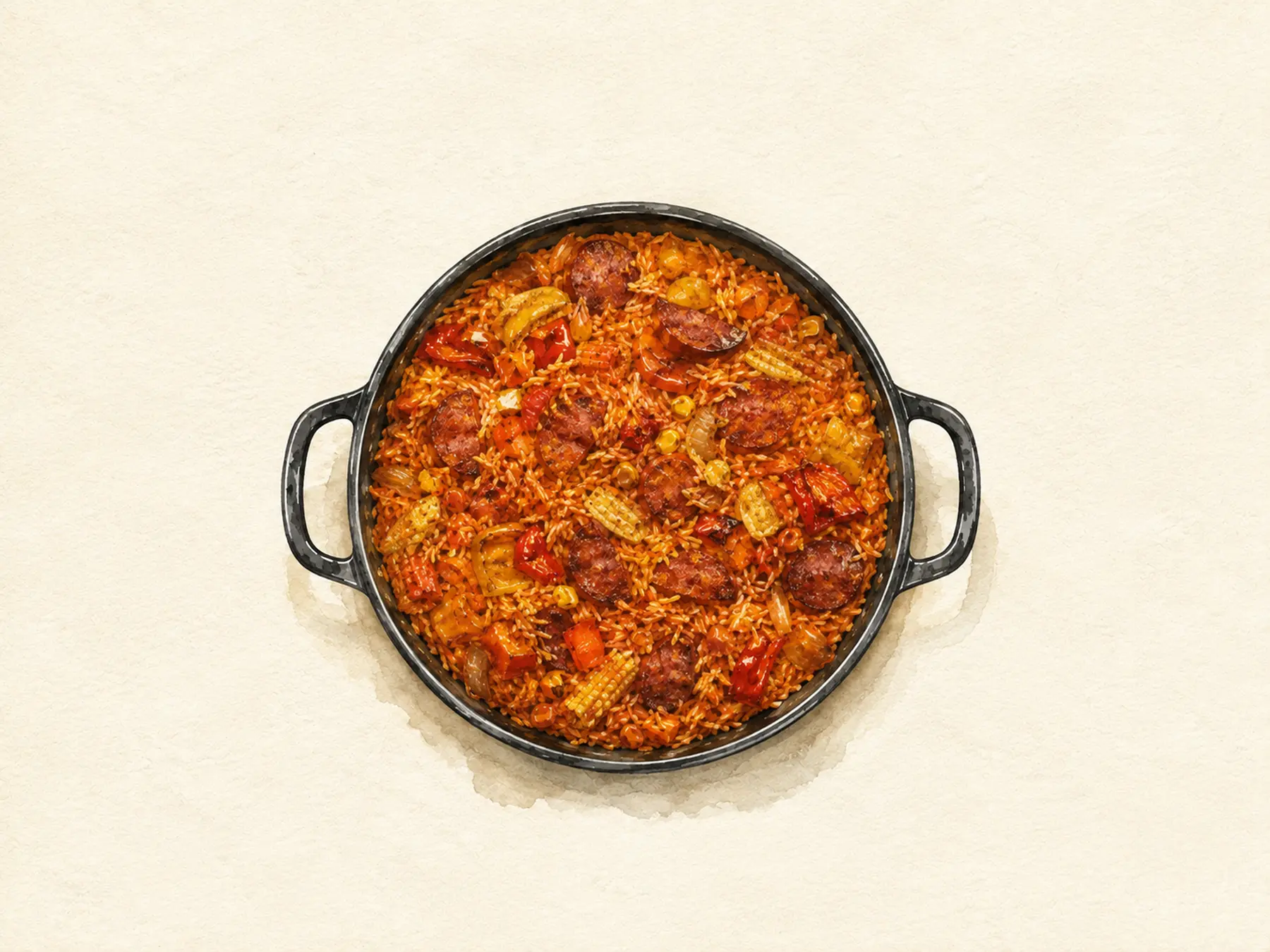
Smoky Chorizo One-Pan Rice started with a meal kit that promised dinner in 20 minutes and left us eating gravel after ten. The useful bit was the pan. Everything else had to go.
Current Cook timing: 50 min including preparation. The time in this story describes the pan sequence and rest. Preparation is now counted in the Cook total too.
This dish exists because an Old El Paso meal kit annoyed me repeatedly.
The kit contained seasoned rice, a tomato sauce pouch and a spice mix. You supplied the chicken, onion and peppers, threw everything into one pan and supposedly had dinner in 20 minutes. Crucially, the rice was meant to simmer for ten minutes in 350ml of water.
We must have made it five times. Every time, we reached the ten-minute mark and the rice was still like gravel.
So we added more water, cooked it longer, added more water and eventually ate about 40 minutes after we started. By then the chicken was overcooked and all the extra liquid had diluted the sauce until it tasted of bugger all.
It was technically a one-pan meal. Calling it convenient was more ambitious.
Keeping the one good idea
The basic concept was sound: cook the rice in the frying pan with everything else. Not paella, not risotto and no separate saucepan of rice to deal with.
So I kept the pan and rebuilt the dish around the three things that had annoyed me: overcooked chicken, tasteless rice and a disappointing tomato sauce.
The first homemade versions used chicken and chorizo together. It quickly became obvious that the chicken was adding more work than flavour. Chorizo brought smoke, fat, seasoning and texture. The chicken mostly brought another opportunity to overcook something.
We ditched it.
Chicken can still work if you particularly want it. I would coat it in the same spices, cook it separately, let it rest and return it to the pan at the end. I haven't properly developed that version because I'm not especially interested in solving the chicken problem. The dish doesn't need both.
The chorizo problem
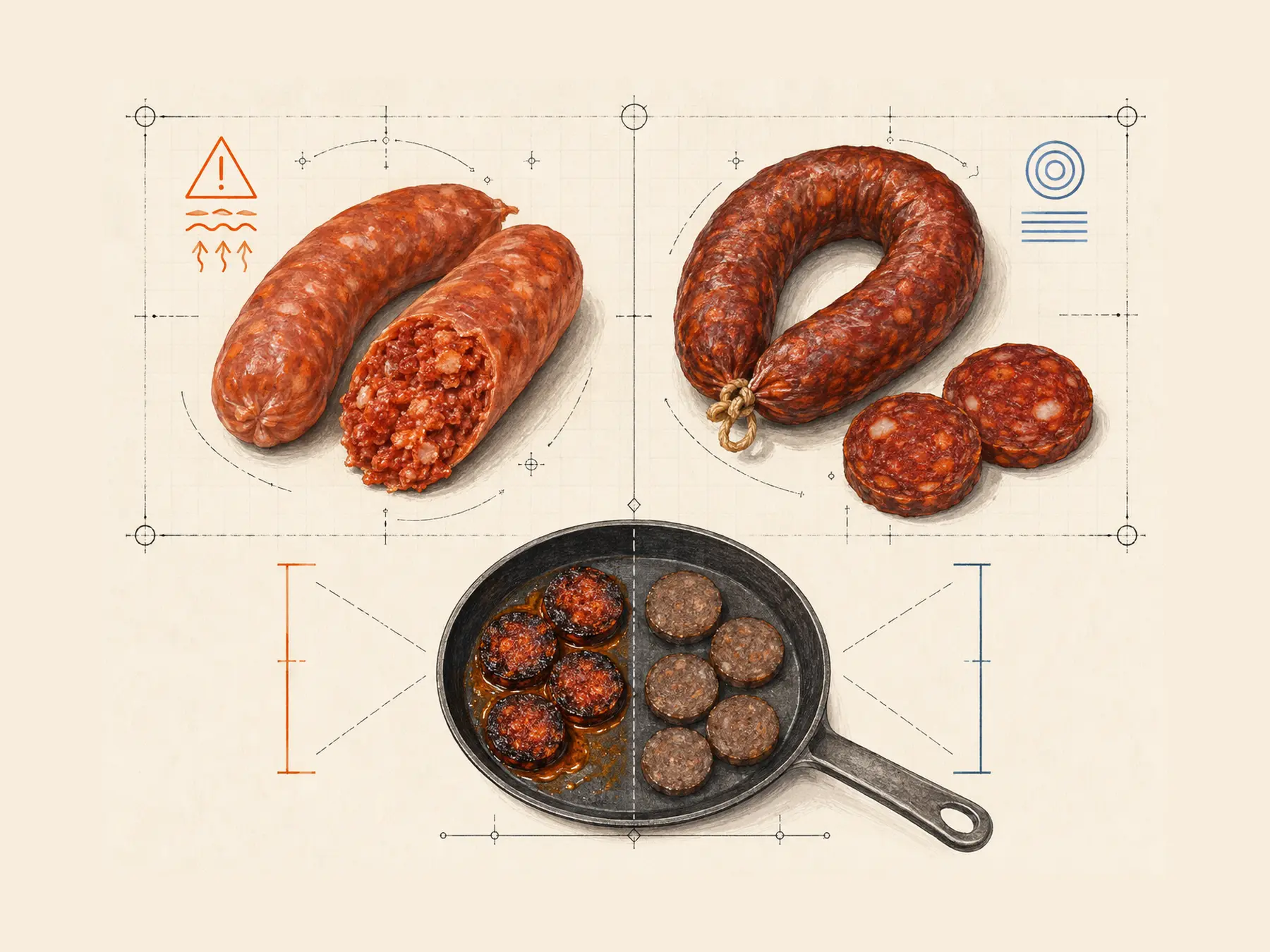
Not every chorizo ring behaves in the same way.
Noel Smoked Chorizo develops properly dark, crisp edges while remaining softer in the middle. Tesco Finest Spanish Chorizo went grey-brown, cooked a little like a pork scratching and never achieved the same texture.
They are both cured chorizo rings and their published ingredients don't provide a neat explanation for the difference. This is not a universal culinary rule. It is simply what happened repeatedly in our pan, and the Noel version won.
Originally, the chorizo stayed in the pan while the rice cooked. That gave the dish flavour, but it ruined the best part of the chorizo. After 20 minutes simmering in stock, the crisp outside softened and the whole piece became one texture.
Now it gets cooked properly at the beginning, removed from the pan and stirred back through at the very end. It only needs enough time to warm up. The crisp outside and softer middle survive intact.
The vegetables need colour
A one-pan dish encourages you to move through every stage too quickly. That doesn't work here.
A light touch leaves the peppers wet and rubbery. The onion and vegetables need time to catch and develop some char because that flavour eventually runs through the entire pan. The garlic joins them nearer the end, although I have never timed it with a stopwatch or worried excessively about it burning.
The tomato purée came from the vague idea that the packet sauce had been doing something useful. Tomato worked with the dish, so I took it much further and eventually discovered that cooking the purée properly made everything deeper and richer.
Smoked paprika became the defining flavour. Cumin arrived at some point and stayed, although I genuinely cannot remember where it came from. It may have been inspired by the original spice mix or I may simply have thrown it in.
The important bit is not to stop once the purée and spices are technically combined. Keep them on a sensible heat until the vegetables deepen in colour and the whole pan smells properly rich. You can push this stage further than you might think.
Sweetcorn is essential. Its sweetness and bright colour cut through the smoky tomato base. The peppers, carrots and baby corn are more flexible: they are there to pack the dinner with vegetables rather than define its flavour. Baby corn was only added recently and works brilliantly.
Other vegetables should work, but I haven't tested a list of substitutions and I'm not going to invent one.
Rice takes as long as rice takes
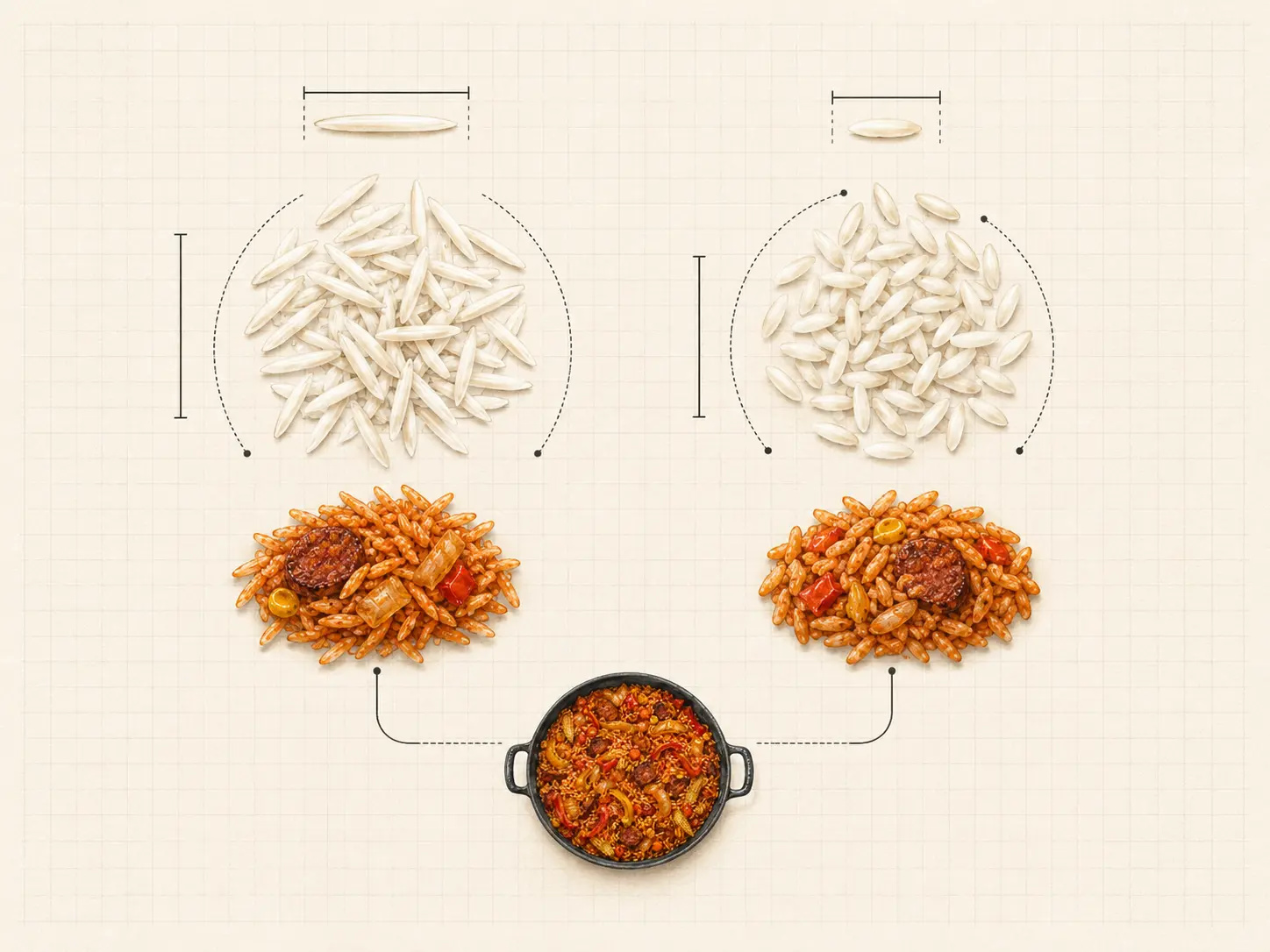
Basmati and ordinary long-grain rice both work. We have used both and noticed no meaningful difference in this dish, so use whichever is in the cupboard.
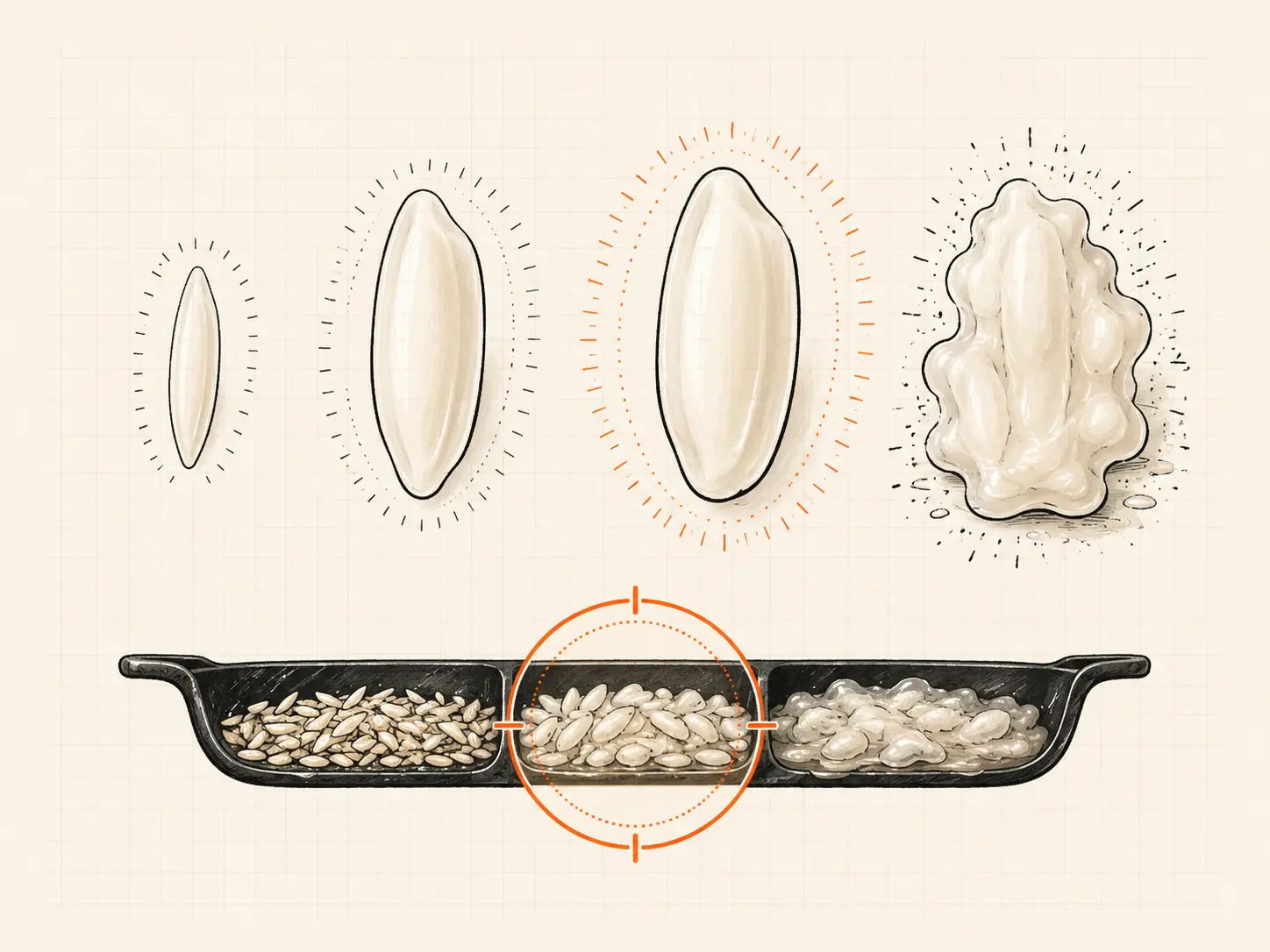
The stock measurement is a starting point rather than a sacred number. The only reliable way to judge the rice is to taste it as it cooks. If the pan is drying out while the grains are still hard, add a little more liquid.
The mistake is waiting until the rice feels completely finished before taking it off the heat. It continues cooking while covered and resting, so it should be almost done when the heat stops.
In this dish, slightly under is far better than slightly over.
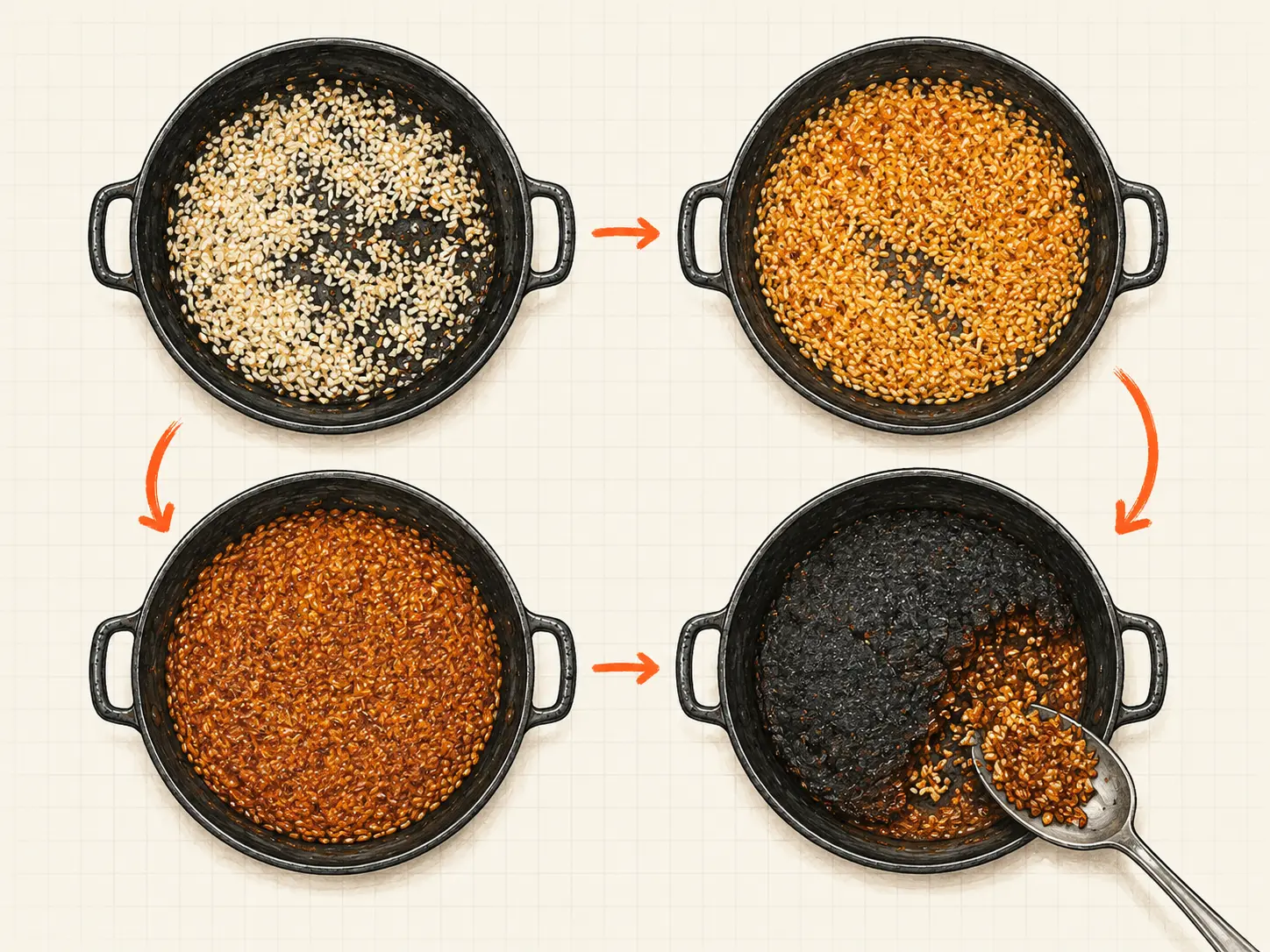
The bottom of the pan does not need to remain pristine either. Scrape the tasty browned catching back through the rice so it becomes part of the dish. If you produce a proper crisp rice-cake layer, even better.
If something comes away from the bottom as a blackened sheet, that has moved beyond catching. Take it out.
The adult version came first
The chipotle paste wasn't added later to create an adult version. The dish existed before our daughter, so the chipotle was removed to create a child-friendly one.
I think the original idea came from using chipotle paste in fajitas, but it was essentially a guess. It gives the finished rice heat and another layer of smoke, and it brings the whole dish together.
If everyone is eating it, the chipotle can go into the pan with the tomato purée and spices. When we are cooking for our daughter, we remove her portion first and add the paste while the remaining rice rests. It doesn't need more heat. A splash of water helps distribute it through the rice.
One large teaspoon of Tesco Chipotle Chilli Paste per adult portion gives it a proper kick. It can take more if you want it.
A dinner worth spending 40 minutes on
This has become a family favourite because it is full of vegetables, makes as much food as you need and reheats exceptionally well. We deliberately cook extra, portion it into lunch tubs, cool it promptly and refrigerate it. The next day it goes into the microwave, stirred and reheated until steaming, with a splash of water if it needs moisture.
It might be even better after a night in the fridge.
The original kit promised a shortcut and then made us spend 40 minutes fighting it. This version asks for those 40 minutes honestly and gives something worthwhile in return.
The one-pan idea was never the problem. It just needed chorizo, a proper tomato base, enough smoke and spice, coloured vegetables, and instructions that admit rice takes as long as rice takes.