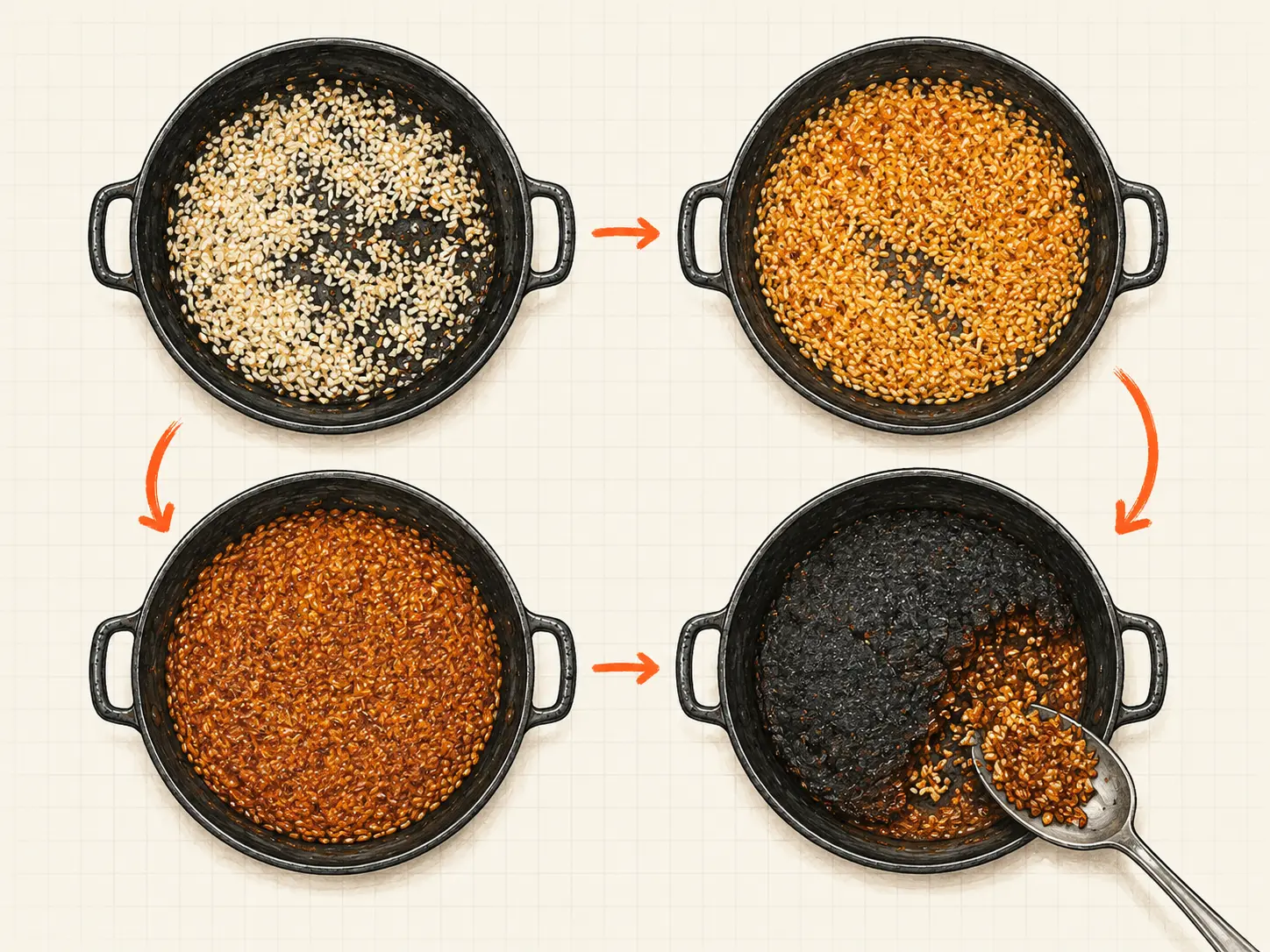
The spoon drags across the bottom of the pan and meets resistance.
This is the moment many cooks panic, add more water and stir everything furiously. Sometimes that response saves dinner. Sometimes it destroys the crisp, browned bit that would have made dinner better.
Food sticking to the bottom is not automatically burnt. It is only evidence that the food has made close contact with the pan.
You need more information.
Four words that are not interchangeable
Catching means food has begun to adhere to the pan. It describes contact, not colour, flavour or damage. Pale rice can catch. Brown rice can catch. Burnt rice certainly catches.
Browning means heat has produced colour and new roasted, toasted or savoury flavours. It may happen to individual grains or to the thin layer touching the pan.
Crisping means enough moisture has left the surface for it to become firm and crunchy. Browning and crisping often arrive together, but not always: something can dry and crisp before it becomes deeply brown.
Burning is the point at which the result turns acrid, bitter and black. More heat is no longer building useful flavour. It is destroying it.
The stages overlap. They are not four tidy settings on the hob.
Why the bottom changes first
At the start of a one-pan rice cook, plenty of liquid surrounds the grains. That water holds the temperature down while the rice hydrates and softens.
As the stock is absorbed and steam escapes, the bottom layer becomes drier. It is also in direct contact with the hottest surface in the whole pan. Once enough water has gone, its temperature can rise more quickly and browning reactions accelerate.
That is why the final few minutes behave differently from the first ten. A pan can move from wet simmer to dry contact surprisingly quickly.
The useful window sits between those states: enough moisture has left for flavour and texture to develop, but not so much heat has accumulated that the bottom turns bitter.
Read the pan with four senses
| Stage | What it looks like | What it smells and sounds like | What the spoon tells you | What to do |
|---|---|---|---|---|
| Catching | Pale or lightly coloured grains adhering in patches | Still smells like the dish; simmer may be quieter at the bottom | Slight drag or resistance | Check the rice and remaining liquid before reacting |
| Browning | Golden, tan or deeper red-brown patches | Toasty and savoury, without harsh smoke | Browned pieces release with a firm scrape | Scrape through if you want the flavour distributed |
| Crisping | A cohesive brown layer with defined grains | Drier crackle or sizzle; rich roasted smell | The layer lifts in pieces or holds together | Preserve it as a crust or break useful pieces through the rice |
| Burning | Black spots or a very dark brittle sheet | Acrid, bitter or smoky enough to sting | The base feels hard, scorched and stubborn | Stop the heat; move good rice away without scraping the black layer through |
Colour alone is particularly unreliable in this recipe. Tomato purée, smoked paprika, cumin and chorizo fat make the base dark before the rice has burned. Smell is the better alarm.
A rich, toasted smell says keep paying attention. A bitter smell says the decision has already been made.
When catching needs intervention
If the rice catches while the centre is still hard and the pan has become dry, it needs a small amount of hot stock and gentler heat. You are not extinguishing a fire; you are restoring enough moisture for the middle to finish.
If the rice is nearly tender and only a little liquid remains, do not automatically add more. Turn off the heat, cover the pan and let the rest finish it.
If the bottom is browning cleanly while the rice above is cooked, scrape some of it through. Those toasted pieces distribute flavour and stop one person receiving the entire good bit.
If a crisp, cohesive layer has formed, you can also leave part of it intact. That is the proper rice-cake moment: a deliberate crunchy contrast rather than an accident to apologise for.
A crust is not automatically a socarrat
Valencian paella deliberately prizes the bottom crust known as socarrat. Other rice traditions have their own named and carefully developed versions.
Smoky Chorizo One-Pan Rice is not paella and is not trying to borrow the name. The comparison is useful for one reason only: experienced cooks in many places have recognised that rice touching a hot pan can become the best part rather than waste.
Here, the crust is an optional consequence of a good cook, not a test of authenticity.
When it is genuinely burnt
Once the smell becomes acrid, stop stirring.
Scraping blackened food through the pan does not spread “char”. It spreads bitterness. Take the pan off the heat and lift the good rice into another dish, leaving the damaged layer behind.
Daniel's visual rule is even simpler: if a section peels away like a burnt sheet of wallpaper, remove it.
You cannot reverse burning. You can often prevent it from contaminating the rest of dinner.
The Plateworks rule
The bottom of the pan does not need to stay spotless.
Scrape useful brown catching through the rice. Enjoy a proper crisp layer if one forms. Remove anything black, bitter or peeling away as a scorched sheet.
The difference is not whether the rice stuck. It is whether the sticking created flavour worth keeping.