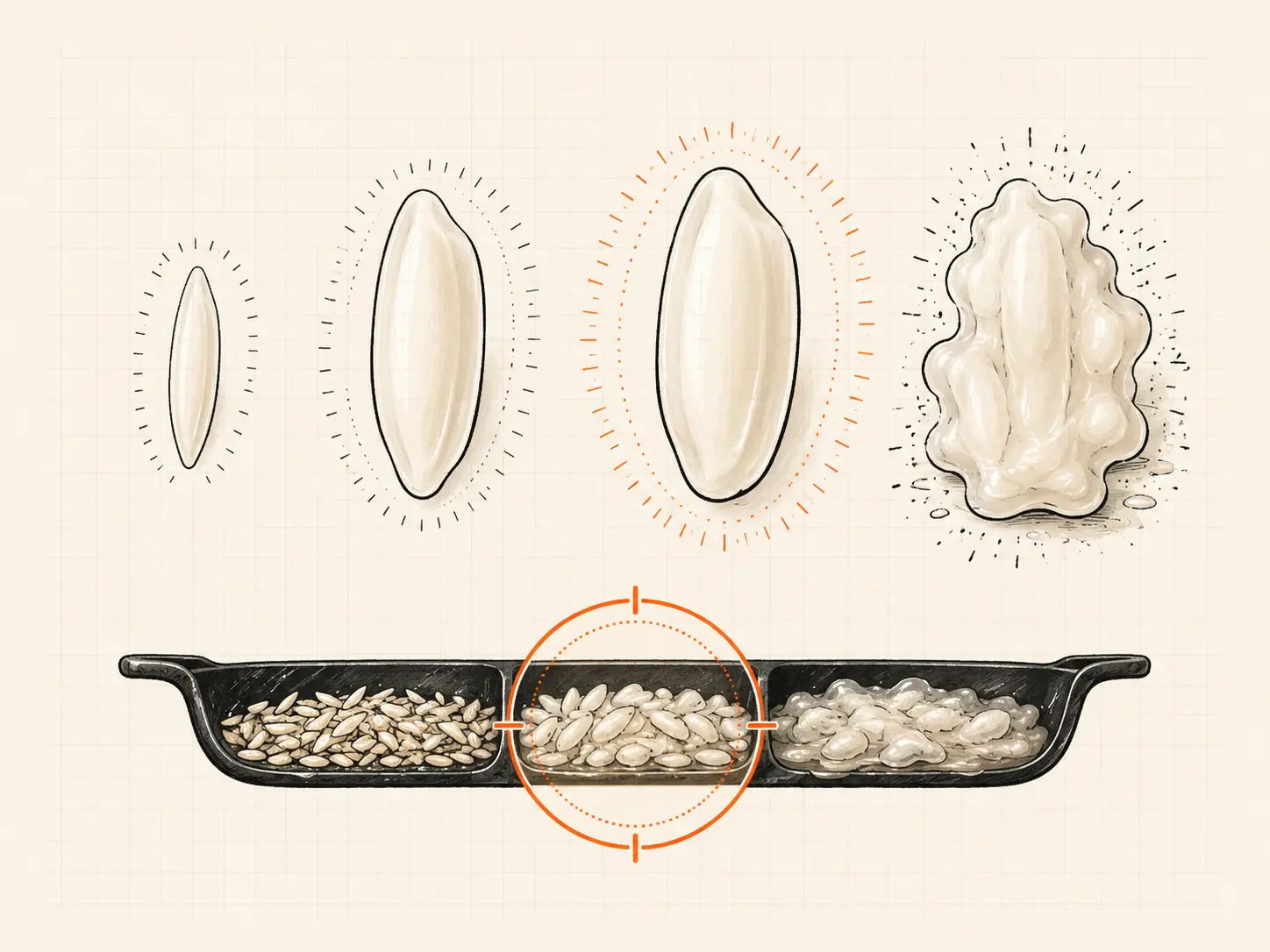
Rice rarely goes from perfect to porridge because of one dramatic mistake. It happens by degrees.
There is slightly too much liquid in the pan. The rice gets another few minutes because some grains still seem firm. Then it rests under a lid after everything already felt cooked.
Each decision sounds harmless. Together, they remove the structure from the rice.
What does “mushy” actually mean?
Cooking rice requires water and heat. The starch inside each grain absorbs water, swells and softens through a process called gelatinisation. That is how hard, dry rice becomes edible.
Mushiness is what happens when the process goes too far for the texture you wanted. The grains become excessively soft, lose their clear edges and begin collapsing into one another.
That is not quite the same as sticky rice.
Some varieties naturally cling together more than others because their starch composition differs. Properly cooked sticky rice can still have recognisable grains and an intentional texture. Mushy long-grain rice feels waterlogged and structurally tired.
Rinsing can remove loose starch from the surface and help grains remain more separate. It cannot undo too much liquid or too much cooking.
Why one-pan rice is harder to predict
Plain rice begins with a fairly controlled relationship between dry rice and water. A one-pan dinner does not.
Stock is only the obvious liquid. Vegetables release moisture. Tomato products contain water. A wide frying pan loses more steam than a narrow saucepan, while a tight lid traps it. Hob strength, pan material and batch size all change what happens next.
That does not make measurements pointless. It means the listed quantity is the starting condition, not permission to stop looking at the pan.
Two people can add the same amount of stock and still need slightly different cooking times or a small adjustment of liquid.
The four common routes to mush
1. Adding too much liquid at once
Rice needs enough liquid to soften all the way through. Give it substantially more than it can use at the intended cooking time and the outer part of the grain continues softening after the centre is tender.
Small additions are easier to control than a large rescue pour. If the rice is still hard and the pan is genuinely dry, add a splash, not a flood.
2. Waiting for perfect rice before turning off the heat
A covered rest is not dead time. The trapped heat and moisture continue working through the rice after the hob is switched off.
If every grain is completely soft before the lid goes on, the resting stage can take it past the point you wanted. Turn off the heat when the rice is nearly there: tender on the outside, with only the slightest firmness remaining at the centre.
Firm does not mean crunchy. If it still feels like grit, it needs more cooking.
3. Stirring it like risotto
One-pan rice needs some movement. Ingredients must be combined, the pan may need scraping and an occasional stir can prevent one area cooking much faster than another.
Constant stirring is different. It disturbs the grains and releases more starch into the surrounding liquid, encouraging a thicker and stickier result.
Stir when the pan needs it. Do not churn it for reassurance.
4. Responding to uneven cooking with more of everything
An aggressive boil can leave the bottom racing ahead while rice near the surface remains firmer. The natural response is to add more stock and give the entire pan longer.
The already-cooked grains then suffer while the hard ones catch up.
Aim for a steady simmer and keep the lid behaviour consistent. If you have spent ten minutes repeatedly removing and replacing it, the recipe's original timing no longer means very much.
Learn to read the pan
| What you find | What it probably needs |
|---|---|
| Hard centre and a dry pan | A small splash of hot liquid, then more covered cooking |
| Hard centre but plenty of liquid remains | More time, not more liquid |
| Nearly tender rice with very little liquid | Heat off, lid on, let the rest finish it |
| Tender rice with visible excess liquid | Briefly cook uncovered to remove moisture, then stop |
| Soft grains beginning to collapse | Stop cooking; further heat will not repair them |
| Intact but slightly sticky grains | Possibly surface starch or the rice variety—not necessarily overcooking |
Taste earlier than feels necessary. By the time you begin wondering whether the rice might be ready, it may already be ready to rest.
Can mushy rice be rescued?
Not completely. Cooked starch does not reverse itself and an over-softened grain will not become fluffy again.
If the grains still hold their shape but the pan is simply too wet, remove the lid and let some moisture evaporate over a low heat. Keep stirring to a minimum.
If the rice is already collapsing, stop. Spreading it out will release heat and prevent it getting worse, but it will not restore the original texture. Once cooled, you may be able to crisp portions in an oiled pan and turn the mistake into something deliberate.
What you cannot do is keep cooking mushy rice until it somehow becomes dry and fluffy. It will become drier, but it will also become more overcooked.
The Plateworks rule
For Smoky Chorizo One-Pan Rice, Daniel's tested rule is simple: it tastes better slightly under than over.
Begin with the starting stock amount in the Cook page’s Simmer step, keeping the rest of the prepared jug in reserve. Taste the rice as it cooks and add only small amounts if the pan dries before the grains are nearly tender. Then remove it from the heat, cover it and let the trapped moisture finish the job.
That is a recipe-tested observation, not a universal rice-to-water formula. Different rice, pans and portion sizes will still behave differently.
The important lesson is transferable: do not wait for the hob to finish work that the covered rest is supposed to do.